Banking Traditions from the Alps and Their Influence on Bonus Triggers in Government-Sanctioned Gaming Apps
Geschrieben von Viktor Günther · 18.10.2026

Banking Traditions from the Alps and Their Influence on Bonus Triggers in Government-Sanctioned Gaming Apps
Swiss banking customs have long emphasized precision, transparency, and strict verification protocols, and these same principles now extend into the design of reward triggers within federally approved reel applications. Observers note that financial institutions in alpine regions maintain rigorous account validation steps before any transaction clears, which in turn shapes how game developers structure bonus activation sequences to align with those requirements. Data from regulatory filings shows that reward triggers often incorporate multi-factor authentication checkpoints modeled directly on standard banking procedures used by Swiss cantonal banks.
Core Elements of Alpine Banking Practices
Traditional alpine banking relies on layered approval processes where each transfer undergoes review for compliance with federal guidelines, and this structure carries over when gaming platforms configure their payout and bonus systems. Researchers at institutions tracking cross-border finance indicate that delayed settlement windows common in Swiss banking have prompted reel application creators to build staggered reward releases rather than instant credits. Such designs prevent mismatches between player accounts and bank records, while also satisfying the oversight demands of federal gaming authorities. What's interesting is how these customs create specific timing rules for feature triggers, because any mismatch could flag an account during routine audits conducted by banking partners.
Federal Approval Standards for Reel Software
Federally approved reel applications must demonstrate that every bonus mechanism meets both gaming and financial regulations before receiving clearance, and this dual requirement forces developers to integrate banking-style verification into core gameplay loops. Reports from European regulatory bodies reveal that approval cycles now include explicit checks on how reward triggers interact with external payment rails, particularly those routed through alpine financial networks. In October 2026 several updates to federal testing protocols further emphasized real-time reconciliation between in-game balances and linked bank accounts, requiring trigger events to pause until verification completes. Those who've examined the updated standards note that compliance documentation must detail the exact sequence of checks mirroring procedures used by major Swiss clearing houses.
Direct Links Between Banking Customs and Reward Mechanics
Alpine customs around account segregation and audit trails translate into reel applications through mandatory separation of deposit, play, and reward funds, with each category tracked independently. According to figures released by the Swiss National Bank, transaction logging standards have grown stricter over the past decade, pushing gaming operators to embed similar logging directly into bonus trigger code. One study revealed that platforms adopting these practices experienced fewer reconciliation errors during quarterly reviews, because the trigger logic already mirrored established banking reconciliation methods. External payment gateways operating under alpine rules therefore receive pre-formatted data packets from reward systems, reducing processing friction while maintaining the transparency expected by regulators.
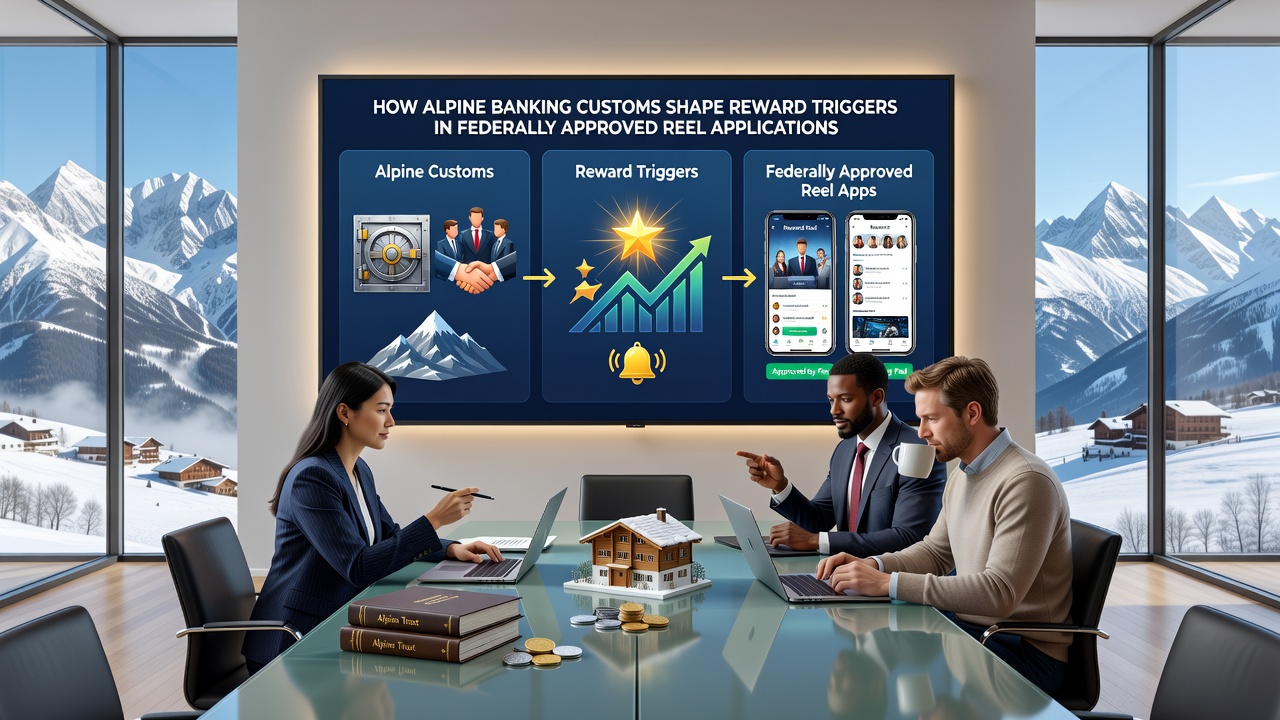
Payment method restrictions common in Swiss banking, such as limits on rapid successive transfers, further influence how developers space out progressive bonus triggers. Evidence from industry reports shows that applications incorporating cooldown periods aligned with banking settlement cycles encounter fewer holds during compliance audits. The reality is that these custom timing structures become part of the federal approval checklist, because they demonstrate respect for the underlying financial infrastructure that supports player funding.
Regional Comparisons and Emerging Patterns
While alpine approaches prioritize verification depth, other jurisdictions apply different pressures on reward design, yet federally approved reel applications operating in Switzerland must still satisfy local banking customs regardless of international models. Data compiled by the Australian Institute of Criminology highlights that cross-jurisdictional operators often maintain separate trigger configurations for each regulatory environment, with the Swiss variant featuring the most granular logging. Canadian provincial regulators have begun referencing similar verification layers in their own guidelines, suggesting wider adoption of alpine-style integration methods. Observers note that these patterns appear most clearly in applications that route transactions exclusively through institutions following Swiss clearing standards.
Conclusion
Alpine banking customs continue to shape reward trigger architecture in federally approved reel applications through requirements for verification sequencing, settlement timing, and independent fund tracking. As federal testing protocols evolve, particularly with the October 2026 updates, developers maintain alignment by embedding banking-style controls directly into bonus activation logic. The result remains a tightly integrated system where financial compliance and gameplay mechanics operate under the same procedural standards.